
What Is INCI? A Beginner’s Guide to Cosmetic Ingredient Names
A Cosmetic Chemist’s Guide to Decoding INCI Labels, Understanding Ingredient Names, and Reading Formulas Like a Pro
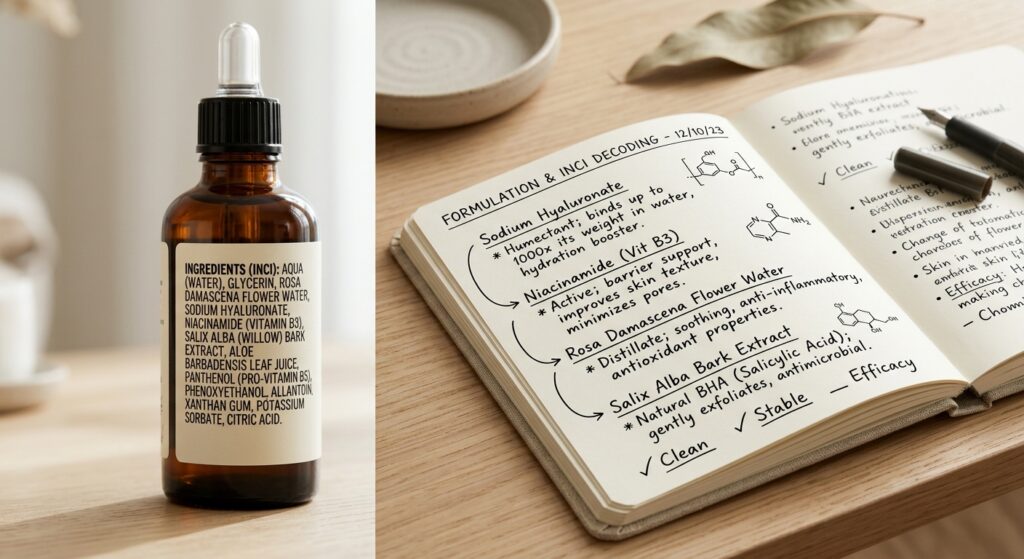
Ever flipped over a skincare bottle and felt like you needed a chemistry degree just to read the label?
You’re definitely not alone. When you’re staring at names like Polyglyceryl-3 Methylglucose Distearate, Palmitoyl Tetrapeptide-7, or PEG-100 Stearate, a simple moisturizer can feel like a lab experiment.
Here’s the good news: you don’t actually need a science background to make sense of it all. There’s a standardized system behind those mouthfuls called INCI (International Nomenclature of Cosmetic Ingredients). Once you learn a few basic rules of how ingredients are named, those intimidating labels start making a lot more sense.
A Brief History of INCI
Before the 1970s, cosmetic ingredients weren’t named consistently. Manufacturers often used common names, trade names, or terminology that varied from one country to another. As an example, Shea Butter could be listed casually as Karite Butter, Shea Nut Oil, or simply African Butter. Under modern INCI, it is consistently identified as Butyrospermum Parkii (Shea) Butter.
As the beauty industry became increasingly global, the need for a standardized naming system became clear. In 1973, the Cosmetic, Toiletry, and Fragrance Association (CTFA) – now the Personal Care Products Council (PCPC) – introduced the International Nomenclature of Cosmetic Ingredients, or INCI.
The goal was simple: create a standardized system for identifying cosmetic ingredients so that manufacturers, formulators, regulators, healthcare professionals, and consumers could more easily understand what is in a product.
Today, INCI names are widely used throughout the global cosmetics industry, although some labeling requirements can still vary region to region.
INCI Names vs. Trade Names and Marketing Names
While the back of the bottle has become relatively standardized, the front of the bottle and the marketing surrounding it are a completely different story. Brands routinely use trade names and marketing terms to tell a compelling story, which can make connecting front-of-pack claims to back-of-pack labels a bit confusing.
Here is how to decode the three types of names you’ll encounter:
INCI Name
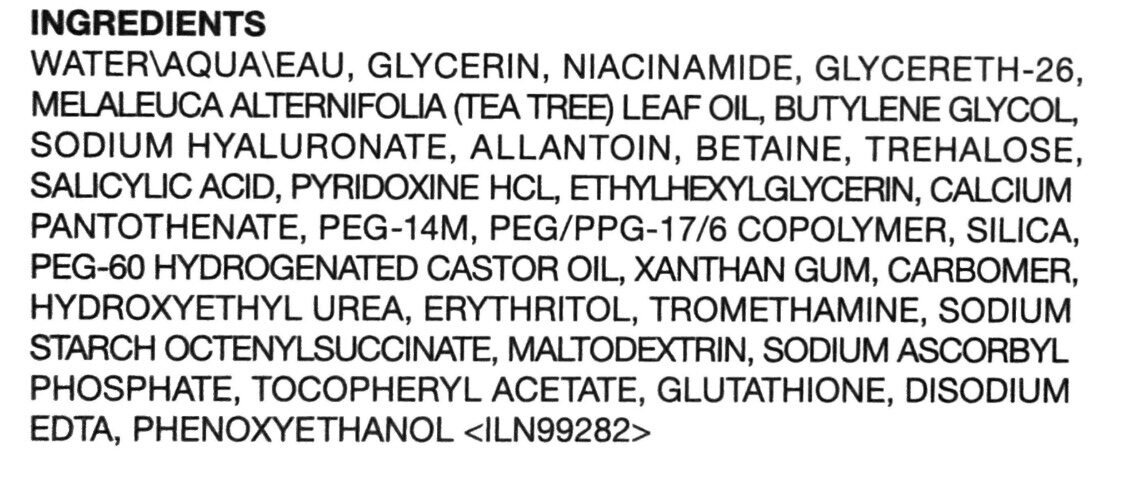
An INCI name is the official, standardized identifier used to declare cosmetic ingredients on product packaging (see the ingredient label example below). Even when a brand purchases a proprietary active blend from a supplier, the finished product must still declare the individual ingredients using their appropriate INCI names and their concentration on the ingredient label. As a general rule, ingredients present at concentrations above 1% are listed in descending order of concentration. Ingredients present at 1% or less may be listed in any order after those above 1%. For cosmetic chemists, understanding these naming and labeling conventions is a valuable tool for decoding formulas and evaluating ingredient lists – something we’ll explore in greater detail in future articles.
Trade Name
A trade name is a commercial brand name assigned by a raw material supplier to identify a specific cosmetic ingredient or proprietary ingredient blend. Unlike an INCI name, a trade name often represents more than a single raw material – it may include a unique manufacturing process, a standardized active concentration, or a combination of ingredients designed to work together.
Most cosmetic products list only the required INCI names on their ingredient labels. However, brands may sometimes highlight a trade name on the front of the package or in marketing materials when an ingredient is a key selling point or has strong consumer recognition. A good example is Argireline®, a trade name used to market a peptide complex featured in products such as The Ordinary serum below.
The Ordinary – Argireline Solution 10%
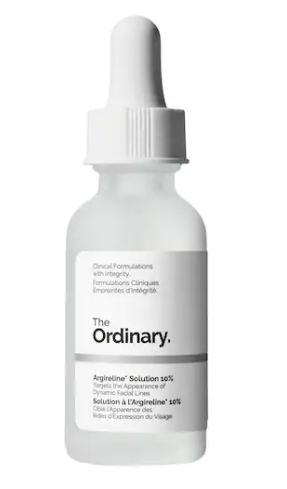
“Argireline®” is the trademarked trade name for the peptide Acetyl Hexapeptide-8, developed by Lipotec S.A.U. The “10%” on the label refers to the concentration of the Argireline® raw material, not the concentration of Acetyl Hexapeptide-8 itself.
Because the Argireline® raw material is supplied as a solution, the actual amount of Acetyl Hexapeptide-8 in the finished product is considerably lower. Most of the solution consists of water and other solvents that serve as the delivery vehicle for the peptide.
Marketing Name
A marketing name is consumer-facing language used to describe a group of ingredients, a proprietary blend, or a formulation technology. Terms such as “marine complex,” “vitamin blend,” or “peptide technology” may sound impressive, but they don’t necessarily tell you exactly what the ingredient is or what you’ll find on the product’s ingredient list.
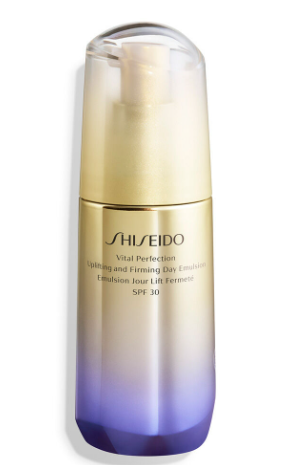
Consider Shiseido’s KURENAI-TruLift Complex™, featured in its VITAL PERFECTION Uplifting and Firming Day Emulsion. While the proprietary name sounds sophisticated, it tells us little about what the complex actually contains. To understand the technology, we need to look beyond the marketing name and examine the individual ingredients associated with it. Reading through the marketing material reveals that KURENAI-TruLift Complex™ incorporates safflower extract, Odoriko botanical extract, and Bulgarian rose water.
Shiseido – VITAL PERFECTION Uplifting and Firming Day Emulsion
By identifying the specific INCI names used, we can dig deeper into the individual materials and evaluate their potential efficacy, functionality, and role in the formulation.
What Does an INCI Name Tell You?
An INCI name is essentially a standardized name used to identify a cosmetic ingredient. But INCI names aren’t simply a collection of chemical names. The International Nomenclature Committee (INC) uses established naming conventions that take into account an ingredient’s chemical composition, structure, source, and other characteristics. You can find the full rulebook at the following link:
INCI Nomenclature Conventions — Personal Care Products Council
Once you understand some of these basic conventions, ingredient lists become much easier to decode. Rather than memorizing thousands of ingredient names, you can start recognizing patterns that reveal how an ingredient is constructed and, in many cases, provide clues about how it functions in a formula.
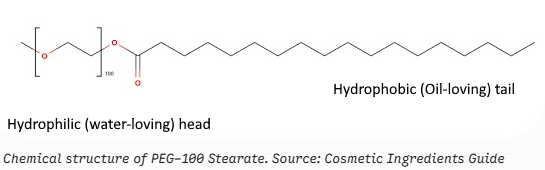
Consider surfactants and emulsifiers. When you see naming patterns such as Cetearyl Alcohol or PEG-100 Stearate, the name can provide clues about the ingredient’s chemical structure and the hydrophobic (fat-loving) and hydrophilic (water-loving) components that contribute to its function. For example, in PEG-100 Stearate, the Stearate portion is derived from stearic acid and represents the more hydrophobic, oil-loving portion of the molecule, while the PEG-100 portion is the more hydrophilic, water-loving component. This combination allows the ingredient to interact with both oil and water phases, which is a key characteristic of many emulsifiers and surfactants.
Esters follow their own recognizable naming patterns. Many cosmetic esters are formed by combining an alcohol with a fatty acid, and their names often reflect these building blocks. For example, Isopropyl Myristate is an ester made from isopropyl alcohol and myristic acid. In a cosmetic formula, it is commonly used as an emollient to provide a lightweight, silky feel and improve spreadability. Recognizing ester names can therefore give you clues about how an ingredient may behave in a formulation, even before you know its specific function.
Botanical ingredients follow a different set of conventions. Camellia Sinensis Leaf Extract, for example, identifies an extract derived from the leaves of the Camellia sinensis plant – the same plant used to produce green tea. The name can also tell you which part of the plant was used, such as the leaf, seed, root, flower, or fruit.
These conventions aren’t universal formulas that allow you to determine everything about an ingredient from its name alone, but they provide a useful starting point. Learning to recognize these patterns can help you quickly identify an ingredient’s chemical class, structural components, or botanical source without needing to memorize every ingredient name – and can make even a long INCI list much easier to understand.
Why Ingredient Lists Don’t Tell You Everything
While the INCI system provides a standardized language for cosmetic labeling, an ingredient list only tells you what is present – not the full story behind the ingredient. The same INCI name can encompass raw materials with significant differences in molecular weight, physical properties, purity, concentration, and overall quality. These differences can have a meaningful impact on how a finished product feels, functions, and ultimately performs on the skin.
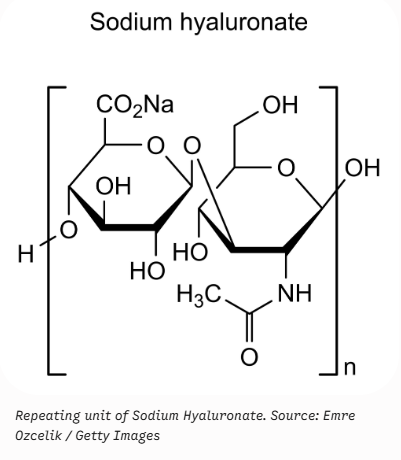
Take Sodium Hyaluronate (HA) as an example. HA is an unbranched polysaccharide composed of repeating disaccharide units. While the INCI name identifies the general chemical identity of the material, it does not specify the polymer’s chain length or molecular weight. The same INCI name can therefore encompass materials with vastly different molecular sizes – for example, a polymer with 1,000 repeating units versus one with 10,000.
These differences in molecular weight can significantly influence the ingredient’s behavior in a formulation, affecting properties such as viscosity, film formation, skin feel, and its interaction with the skin.
Botanical ingredients could have even more variables. Consider Camellia Sinensis Leaf Extract, which we discussed earlier. The INCI name identifies the plant source, but it does not tell you everything about how the extract was produced. Different extraction methods, solvents, temperatures, and processing conditions can influence which compounds are extracted and in what concentrations. As a result, two raw materials carrying the same INCI name can have very different chemical profiles – and potentially different effects in a finished formulation.
Ultimately, INCI standardizes the identity of an ingredient, but it does not fully describe its molecular structure, specification, manufacturing process, concentration, or performance characteristics. This is why cosmetic chemists look far beyond the consumer label when selecting raw materials. The INCI name is the starting point – not the complete story.
Why Learning INCI Matters
Understanding INCI names and their limitations won’t turn you into a cosmetic chemist overnight—but it can make you a much more informed skincare shopper.
Once you understand the basics, you can start to:
- Recognize key ingredients and understand what they actually do in a formula.
- Compare products more objectively across different brands and price points.
- Identify patterns in the products that consistently work—or don’t work—for your skin.
- Look beyond marketing claims and evaluate what is actually inside the bottle.
But there’s an important distinction to keep in mind: an INCI list tells you what ingredients are called, not everything about the formula.
That’s why learning to read an ingredient list isn’t about memorizing hundreds of intimidating chemical names. It’s about learning to ask the right questions.
1. What is it?
Start with the INCI name. Identify the ingredient and, when possible, understand its basic chemical identity.
2. Why is it there?
Consider its likely role in the formula. Is it an emollient, humectant, surfactant, emulsifier, preservative, active ingredient, rheology modifier, or something else?
3. How much might be there?
An ingredient’s position on the label can provide clues about its relative concentration, but an INCI list generally cannot tell you the exact percentage present.
4. What doesn’t the label tell me?
This is where the limitations of INCI become important. The name may not reveal details such as molecular weight, purity, raw-material grade, processing history, concentration within a blend, or the specific physical properties of the material.
The goal isn’t to look at a label and decide which ingredients are “good” or “bad.” It is to understand the chemistry behind the names and recognize that an ingredient’s name is only one piece of the formulation puzzle.
INCI gives you the language. Formulation science gives you the context.
And once you understand both, that intimidating list on the back of a skincare bottle starts to look a lot less like a chemistry exam – and a lot more like a formula waiting to be decoded.